Peec AI Review (2026): Cheap to Start, Expensive to Grow
I tested Peec AI as an agency on a real brand. It tracks visibility well but gives little advice you can act on. Pricing, onboarding, verdict.
When I searched for "Peec AI review", every written review on Google's first page came from a company that sells its own AI visibility services or AI SEO tool.
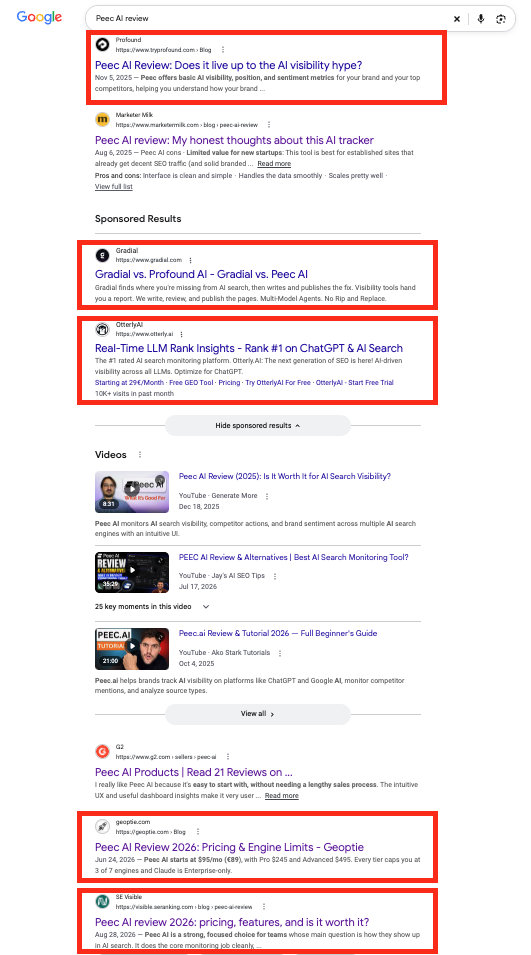
So I tested it myself. I signed up for Peec AI as an agency, set up a real brand as my client, and recorded every minute of my interaction: almost 50 minutes of screen time.
I judged it on six questions I ask of every AI visibility tool. Peec AI answered three of them, failed one, and two need more time.
Let's dive right in:
What’s Peec AI?
Peec AI is an AI search analytics platform. It tracks how often ChatGPT, Google AI Overviews, Gemini, Perplexity, and other AI assistants mention your brand, in what position and with what tone. You can also compare your brand visibility with your competitors.
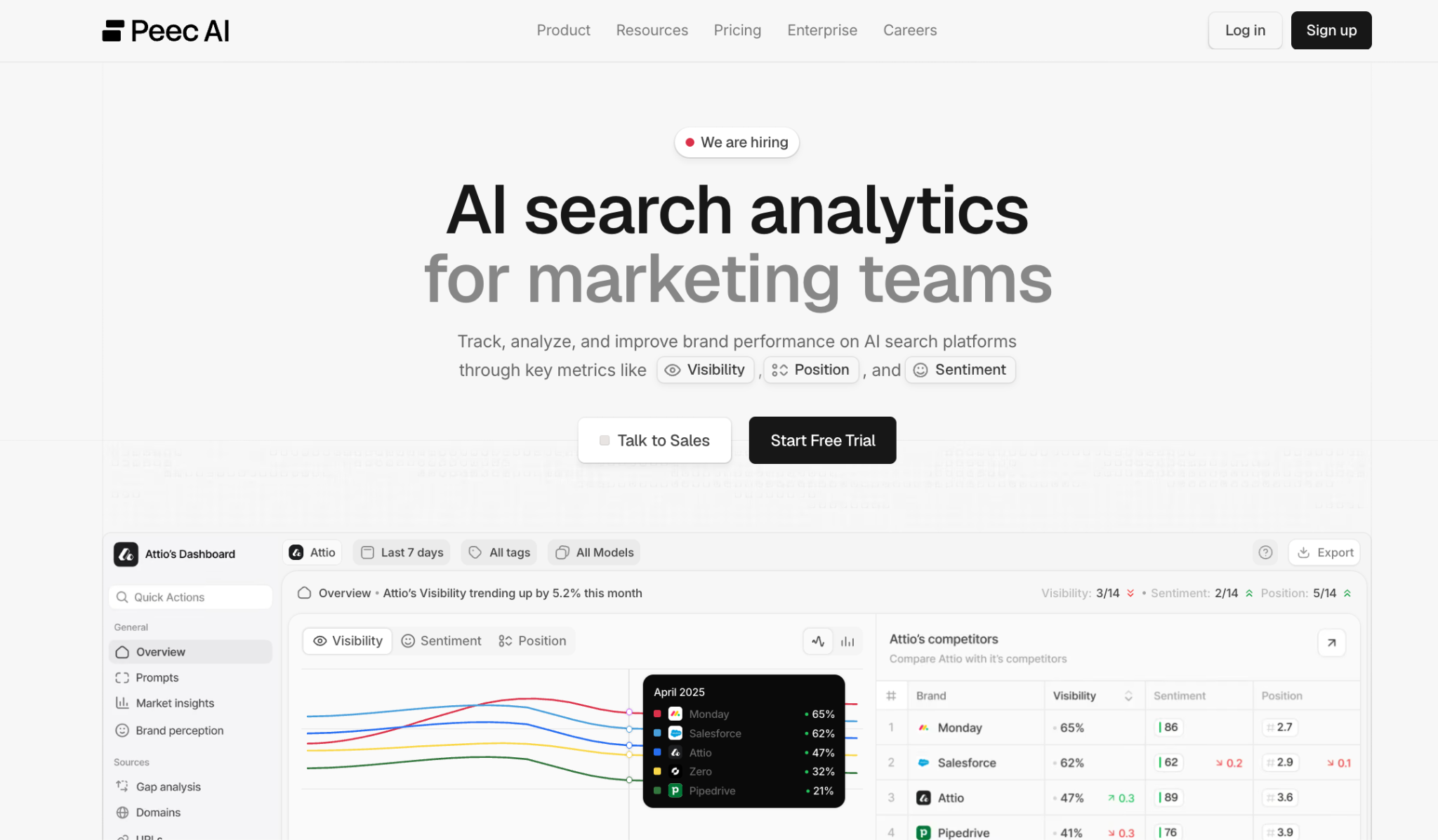
The company behind this tool, Peec AI GmbH, was founded in 2025 and is headquartered in Berlin, Germany.
Peec AI monitors the visibility your brand gets in AI responses. But then:
Why do we need to track brand visibility in AI responses?
AI assistants are now a real place where buyers research what to buy. (See who is winning the AI race.) According to a survey, among the respondents who use AI at least once per week, 55.1% use AI as an information source to make a purchase online.
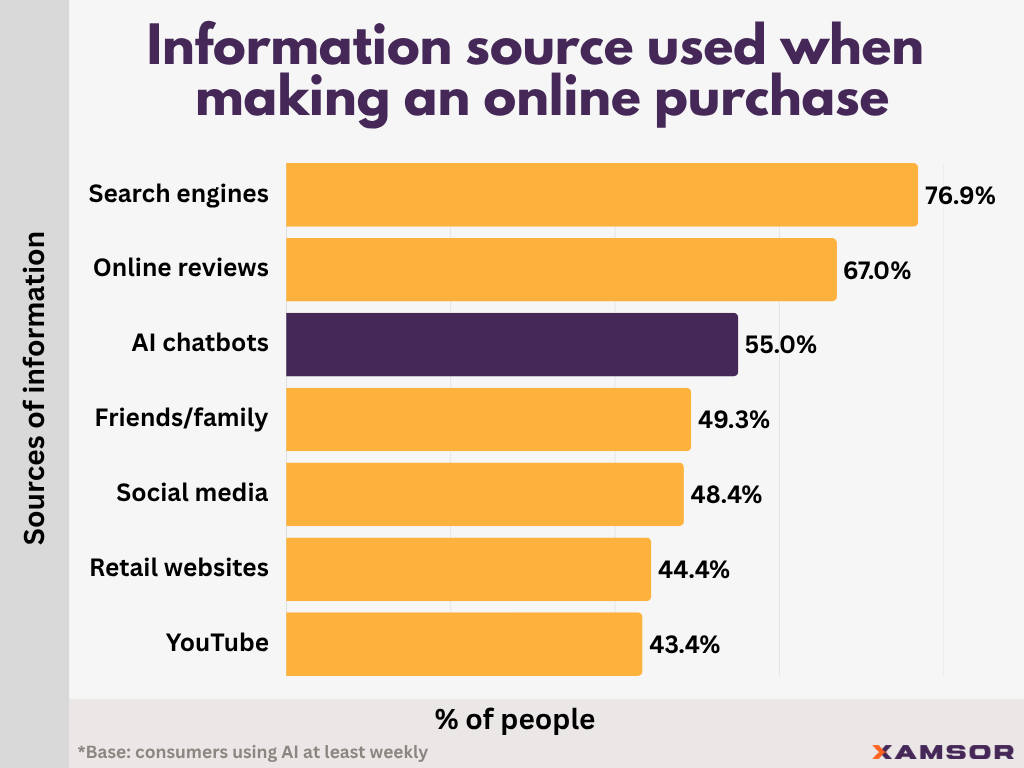
Data Source: Semrush
As such, AI chatbots have become a distribution tool for many businesses, just like search engines. It makes complete sense for brands to monitor their mentions and visibility in AI responses. And tools like Peec AI show you your brand visibility in AI responses.
Key facts about Peec AI
Company: Peec AI GmbH, Berlin. It raised a $21M Series A in November 2025.
AI models: you pick 3 per plan from ChatGPT, Google AI Overviews, AI Mode, Gemini, Perplexity, and Copilot. Claude, Grok, DeepSeek, Meta AI, and Mistral cost extra or need a bigger plan.
Tracking: daily. Weekly tracking is only on the Scale agency plan and the custom plans.
Price: from $95 a month for brands and from $245 a month for agencies. Yearly billing saves 15%.
Trial: 7 days. You need a card to start.
My 6 questions for any AI visibility tool
I don't care about dashboards for their own sake. I want a tool that answers six questions:
Am I visible for my queries?
Who are my competitors in AI answers? Does the tool find the right competitors, or too many, or too few?
How am I doing versus those competitors?
How do I improve, and is the advice something I can act on?
Am I progressing over time?
How are my competitors progressing, and who is winning?
Here's how I tested. I signed up as an agency and added improvado.io, a marketing analytics company I know well, as my first client.
I kept Peec's default setup. Peec generated 96 prompts across four topics and set them to run daily on ChatGPT, Google AI Overviews, and Gemini, and gives you the visibility dashboard.
Here’s how the tool fares against my questions.
How Peec AI answers each question
1. Am I visible? Yes, but the visibility score is inflated
Peec showed Improvado at 27.9% visibility, a 59.9% share of voice, and an average position of 1.4.
But here’s the catch:
Peec wrote many prompts that name the brand, like "How do I get started with an Improvado subscription?" Improvado wins those every time. In the performance matrix, these branded prompts score 100% in every topic where they appear.
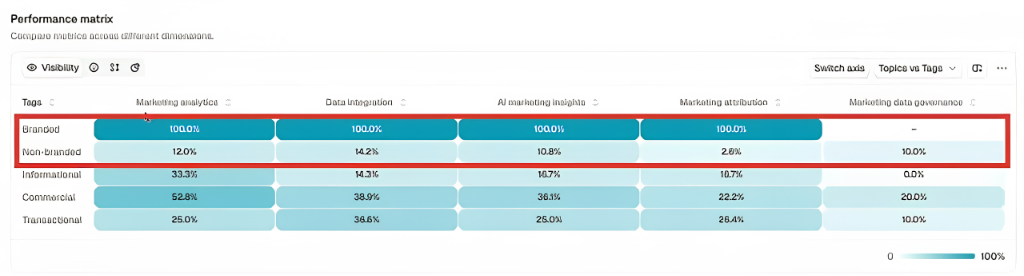
The prompts that don't name the brand score Improvado between 2.6% and 14.2% visibility.
2. Who are my competitors? Mostly right, but hard to fix
Peec found seven competitors on its own: Adverity, Dataddo, Datorama, Funnel, Supermetrics, TapClicks, and Windsor.ai. Most of them are right.
However, three things bothered me:
Onboarding never asks for your competitors. Peec builds topics and prompts first and finds competitors later. I'd rather tell it who I compete with up front, because shared prompts are where the race happens.
Editing the list is difficult. You see competitors on the dashboard, but you change them in Project settings, under Brands. It took me more than a minute of clicking to find that.
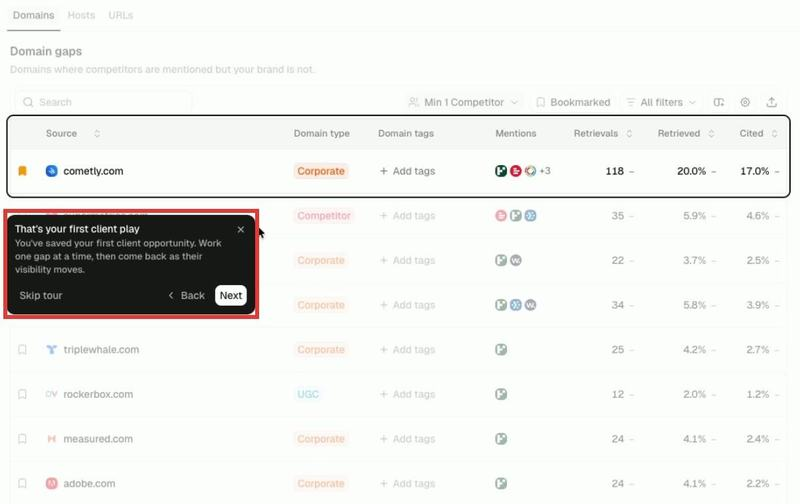
Peec mislabels one clear competitor. Cometly is Peec's own top brand suggestion, with 56 mentions. Cometly sells marketing attribution software, the same thing Improvado sells. Yet the gap analysis tags cometly.com as "Corporate", not "Competitor".
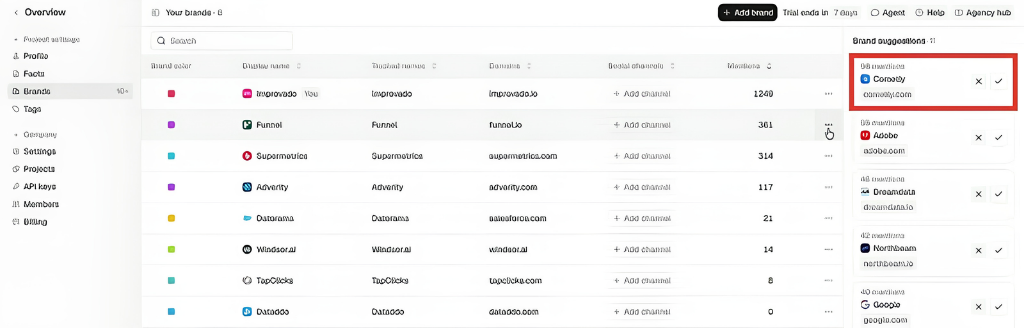
Pro tip: add your real competitors in Project settings, under Brands, on day one. The sooner you fix the list, the sooner your share of voice means something.
3. How am I doing versus competitors? Yes, and it's the best part
This is where Peec AI shines. You get the top brands by visibility, share of voice, sentiment, and position. You can split them by topic, by prompt type, and by AI model.
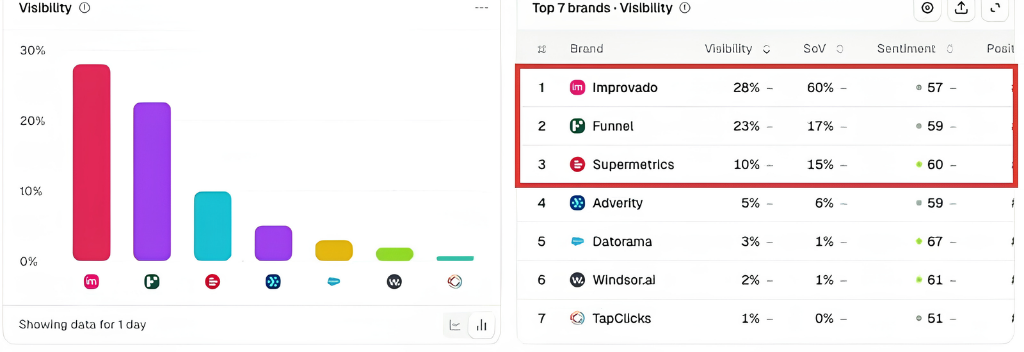
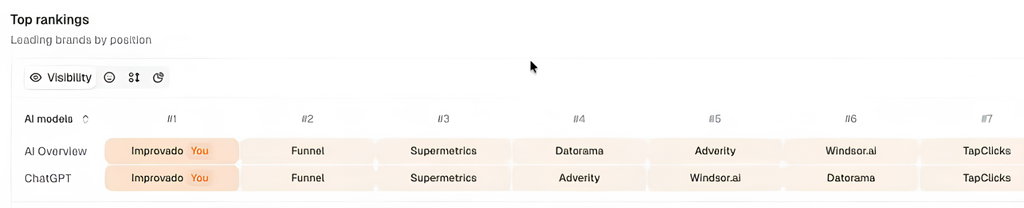
On both ChatGPT and Google AI Overviews, Improvado ranked first, ahead of Funnel and Supermetrics.
4. How do I improve? Not with Peec's advice
Tracking alone doesn't change what AI says about you. And this is where Peec AI falls short.
The Actions page sorts advice into four groups. After the first day, it held 18 fixes for my site and zero for everything else: 0 for my own pages, 0 placements to win, and 0 wrong claims to fix.
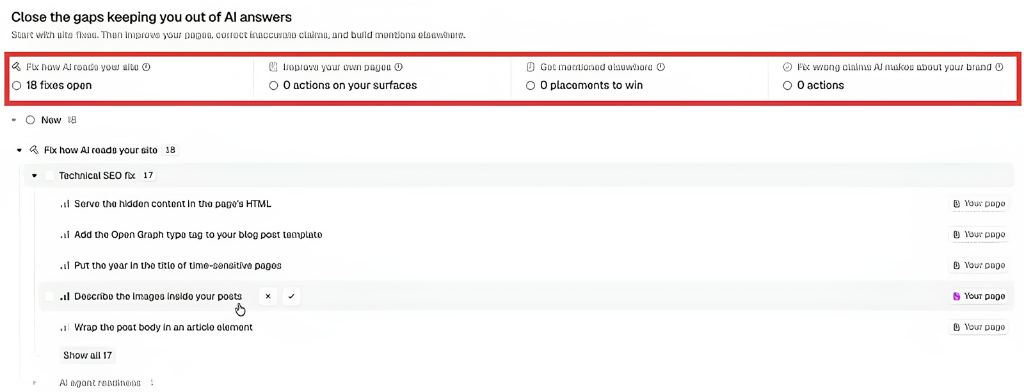
And those 18 fixes are classic technical SEO:
Serve hidden content in the page's HTML
Add an Open Graph tag to your blog posts
Put the year in your titles
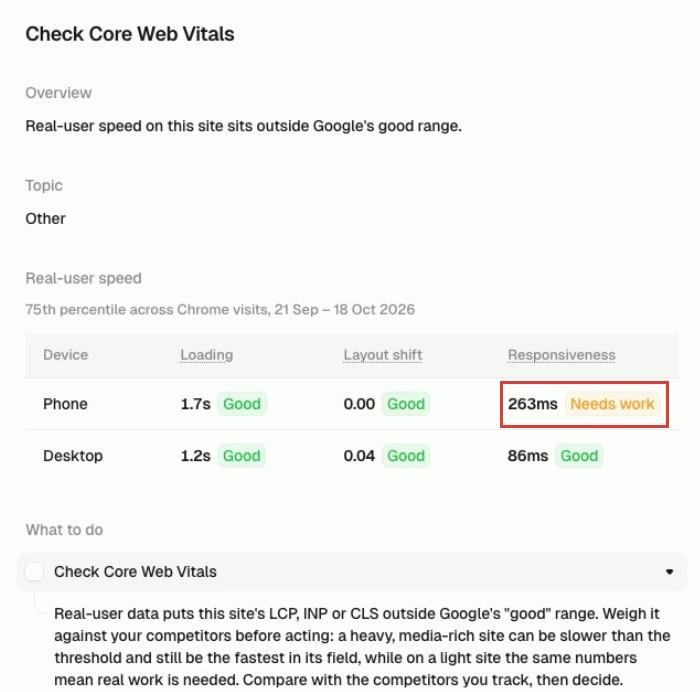
Pass Core Web Vitals
Fair advice for a website. But I haven't seen any evidence that ChatGPT mentions a site more often when it responds in under 300 milliseconds. (If that data exists, I'd love to see it.)
The gap analysis looks more promising. It found 373 domains and 1,000 URLs where AI answers mention your competitors but not you. That's a real list of sites to get onto.
But here's my issue:
You can't do anything with that gap list inside Peec. There are no contacts, outreach, or placements to work on. You can tag a domain or export a CSV, and that's it.
To get onto those sites, you need outreach or paid placements. (I compare placement marketplaces in my FatGrid review.)
Peec's onboarding tour then tells you to "work one gap at a time". Again, I disagree.
Outreach has low reply rates. You should pitch as many sites as you can at once, because you'll win them one by one over the following months.
5 and 6. Am I progressing, and who is winning? Too early to say
It’s too early to say. One day of data can't show a trend. Peec tracks daily, so a few weeks of data should answer both questions. I'll come back to them then.
So, what works well?
#1. Good functionality and attractive dashboard
Peec AI’s core functionality works well. It answers the fundamental question - whether my brand is appearing in AI responses, and if yes, how often?
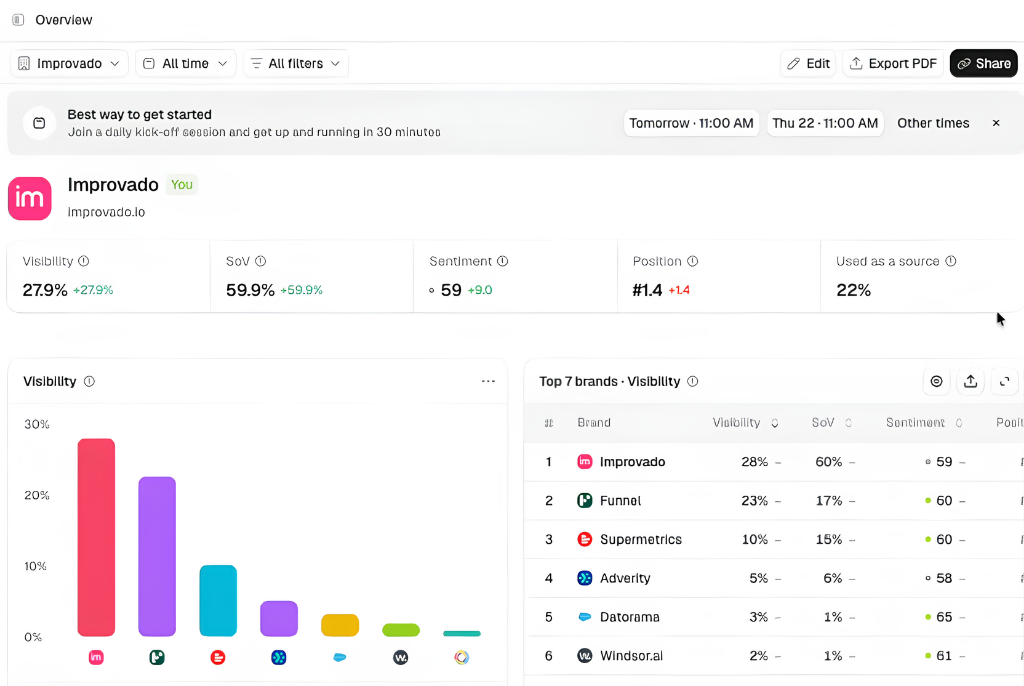
The dashboard is easy on the eyes and shows several parameters, including visibility %, share of voice, average position, sentiment, and source impact.
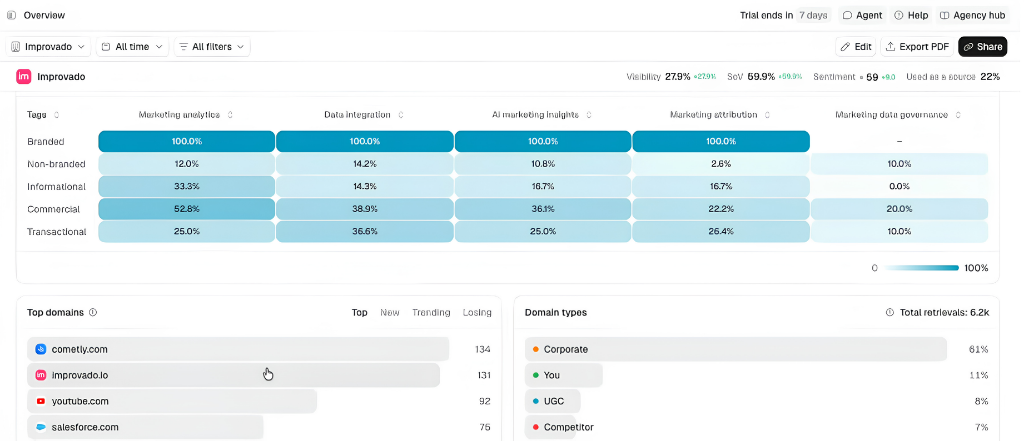
The tool also separately tracks whether AI responses mention the brand and/or cite the brand website. These are two distinct measurements, and having both provides a more complete picture.
The prompt-level reporting is also detailed. I could check individual prompts used and see the associated visibility, position, sentiment, and competitor mentions.
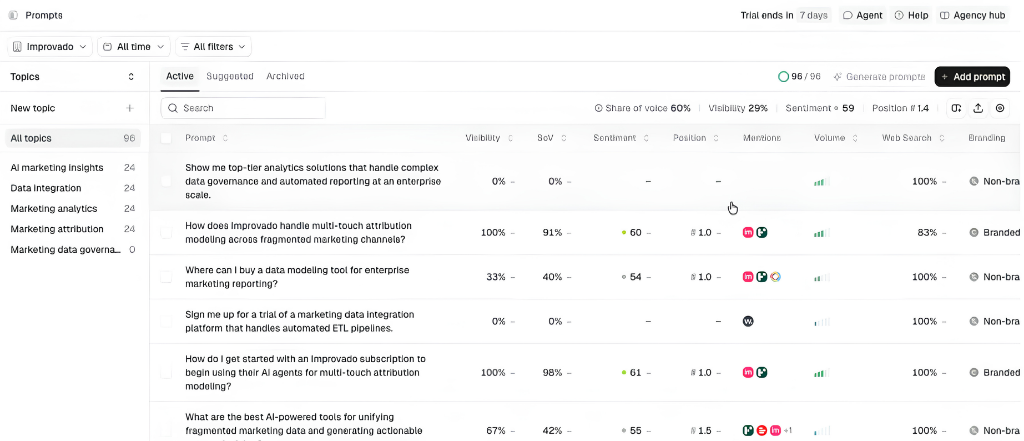
My only complaint here is the overweighted brand queries. When you seed the prompt with something like “how does improvado handle…”, of course the brand would get the mention in responses. While the total visibility score was 27.9%, removing the branded queries drops it to between 2.6% and 14.2%.
#2. Competitor Analysis
Though I had my difficulties in competitor selection, Peec AI’s competitor analysis impressed me. It gives you the top brands by visibility, share of voice, sentiment, and position. You can also split them by topic, prompt type, and AI model.
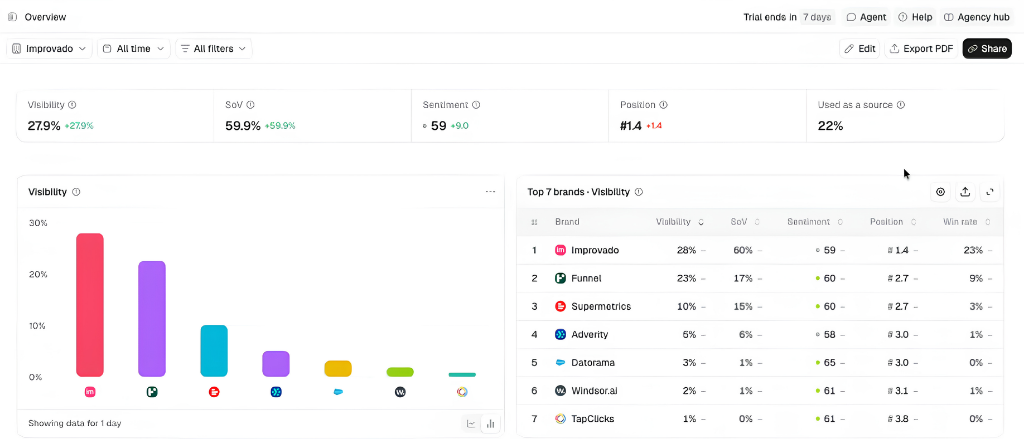
It also ranks all competitors by overall AI visibility and by individual AI model. Here, Improvado ranks top for both AI and ChatGPT.
Bottom line. Peec AI provides a clear view of competitors, with a useful split by context.
#3. Gap Analysis
The gap analysis was probably my favorite part of Peec AI. It shows domains where my competitors are mentioned, but my brand isn’t. As a result, they are cited in certain AI responses, and my brand isn’t. A clear outreach opportunity for my brand to leverage.
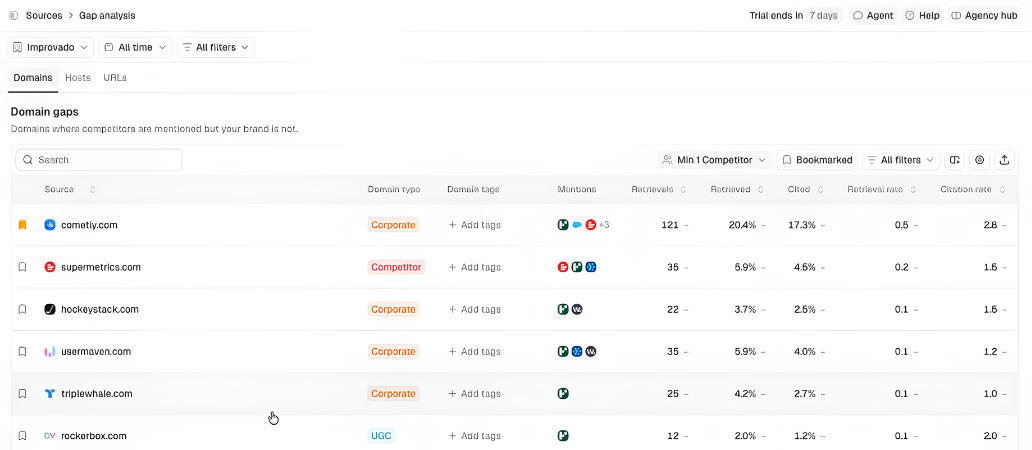
I could filter these domains as well and add tags for future reference. Overall, I loved the gap analysis function here. It would have been even better if Peec AI also incorporated outreach features, but that’s fine. Tools like FatGrid address these guest-posting opportunities well.
What doesn’t work well
#1. Confusing Pricing
Peec AI has two price lists, one for brands and one for agencies.
Brands pay by prompts and projects. Starter, Pro, and Advanced each include 3 AI models, daily tracking, and unlimited users:
Starter: $95 a month, 50 prompts, 1 project
Pro: $245 a month, 150 prompts, 2 projects
Advanced: $495 a month, 350 prompts, 5 projects
Enterprise: custom
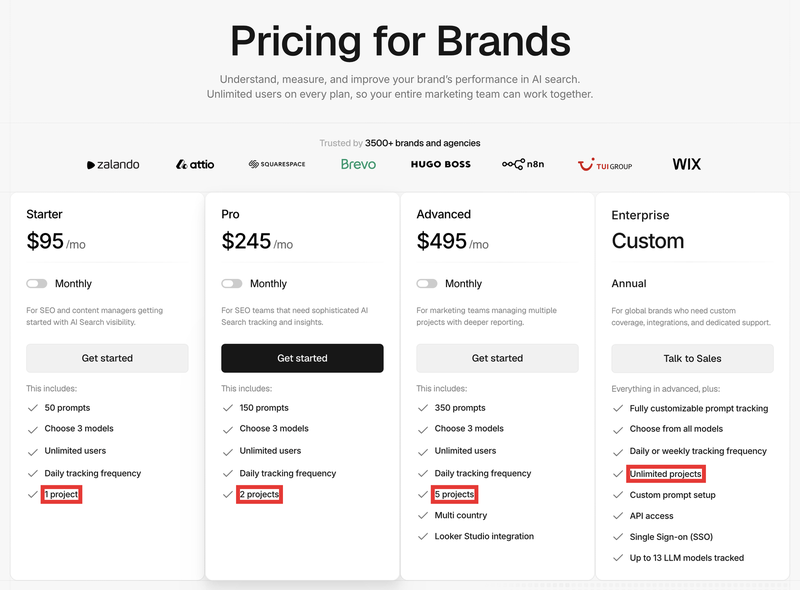
Agencies pay in credits. One credit is one prompt on one AI model for one day:
Essential: $245 a month, 10,000 credits, 3 projects
Growth: $495 a month, 25,000 credits, 10 projects
Scale: $795 a month, 65,000 credits, 25 projects, and the only one of these with weekly tracking
Comprehensive: custom
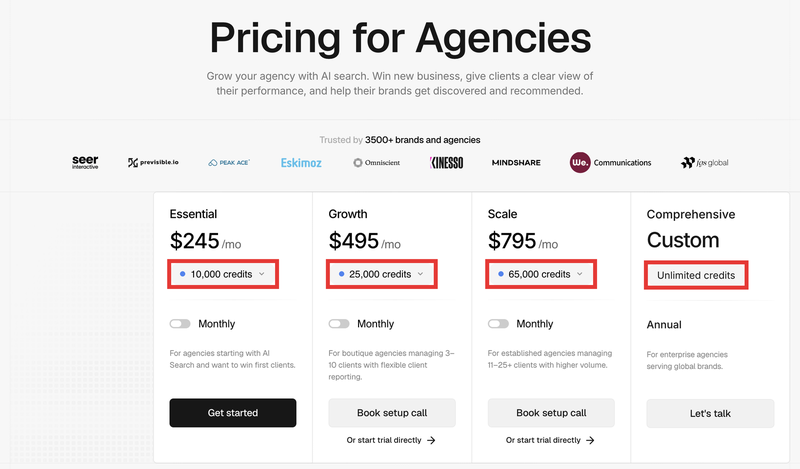
I know this space well, and I still found the pricing hard to read. Most buyers will feel overwhelmed.
Projects are the real limit. Two Starter plans give you two projects for $190 a month.
One plan with two projects costs $245. Five projects take the $495 plan.
One more thing: if you pick "agency" when you sign up, the cheapest plan Peec shows you is $245. The $95 Starter plan isn't offered at all.
Note: prices here are from October 2026. Check Peec AI's pricing page before you buy.
#2. Onboarding: 6 minutes before you see a price
Peec's setup takes too long. You give it your website, then your client's website.
Peec writes a brand profile: category, adjectives, products, and buyer personas. Then it builds topics, writes the prompts, and shows you a preview of the results.
Only then do you see the plans, and the 7-day trial needs a card. That took me about 6 minutes.
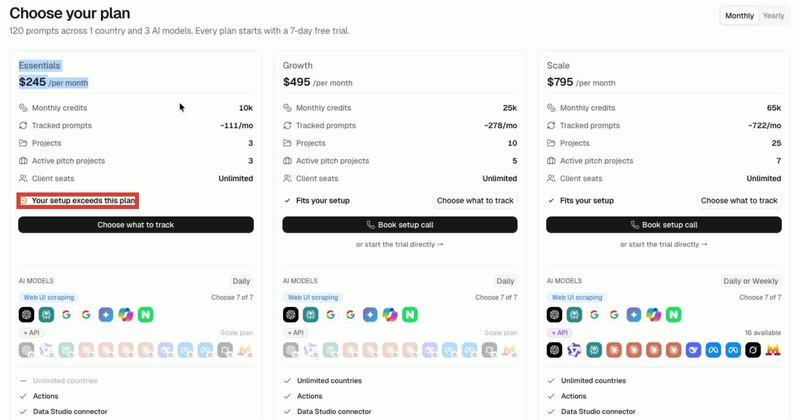
I didn't see a progress bar. And there's no step for competitors.
It's a smart move from Peec's side, to be fair. By the time you see the price, you've already put in the work, so you're less likely to walk away.
One thing I liked a lot: pitch projects.
As an agency, you can run a small project for a prospect, without using your client credits, and show them their AI visibility before they sign. Peec bets that your plan grows with every client you win. Smart.
#3. Actionable Recommendations: Too Generic
As discussed above, I didn’t like the recommendations part from Peec. These are basic SEO improvements you could easily get from SEO tools like Semrush.
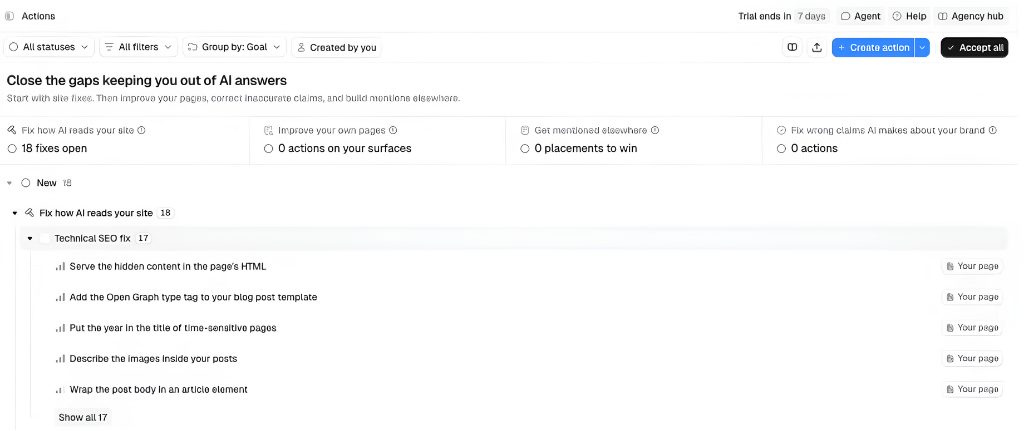
The recommendations include adding years in titles, image descriptions, improving Core Web Vitals, etc. I actually disagree with some of these recommendations. I haven’t seen any evidence of AI responses favoring a site for having a faster response time.
But most of all, Peec thinks the brand has zero placements to win. I actually expected to see recommendations in this area to further improve brand visibility in AI responses. Disappointed to see none here, and so many on generic SEO improvements that hardly move the needle.
What other users say
On OMR Reviews, Peec AI scores 4.8 out of 5 from 18 reviews. Users praise the interface and the support team.
Their complaints match mine:
Onboarding feels complex at first.
Pricing isn't transparent.
Some of the suggested prompts are weak.
Peec AI alternatives
If Peec doesn't fit, these are the trackers I'd look at next:
Otterly.AI: from $29 a month for 15 prompts. Its 7-day trial needs no card. The cheapest way to start.
Scrunch: from $250 a month for 125 prompts on 4 AI models, with site audits included.
AthenaHQ: a free plan with $25 of credits. Paid plans start at $295 a month.
Profound: built for large brands. Its agency plan starts at $99 a month, plus $399 a month per client workspace.
I'm putting each of them through the same six questions.
My verdict: who should pay for Peec AI
Peec AI is a legit tool. It's beautiful, a bit complicated, and slow to set up.
It answers three of my six questions: am I visible, who are my competitors, and how do I compare. Two of those answers come with caveats.
Peec AI fits you if you want a clean daily tracking tool across several AI assistants, and you'll work out how to improve on your own.
It's a weak fit if you want the tool to tell you what to do next. A lot of beautiful dashboards, but not much help on what exactly to do.
Before you trust its numbers, do two things. Remove branded prompts from the headline, and fix the competitor list by hand in Project settings.
Want to see how the others compare? I'm testing the major AI visibility trackers with the same six questions. Tell me which one I should review next.

Max Roslyakov
Founder, Xamsor